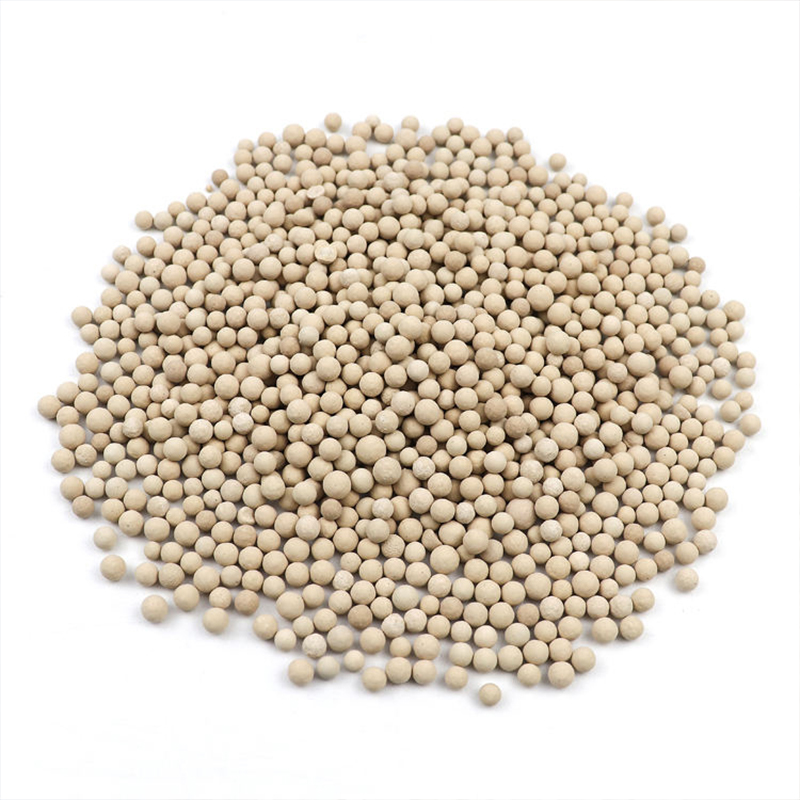
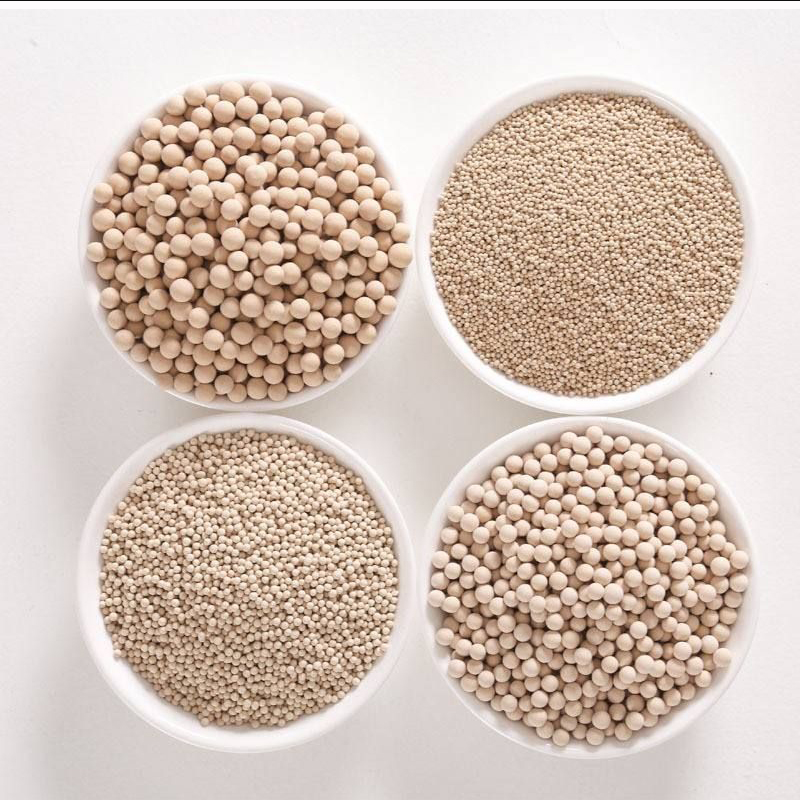
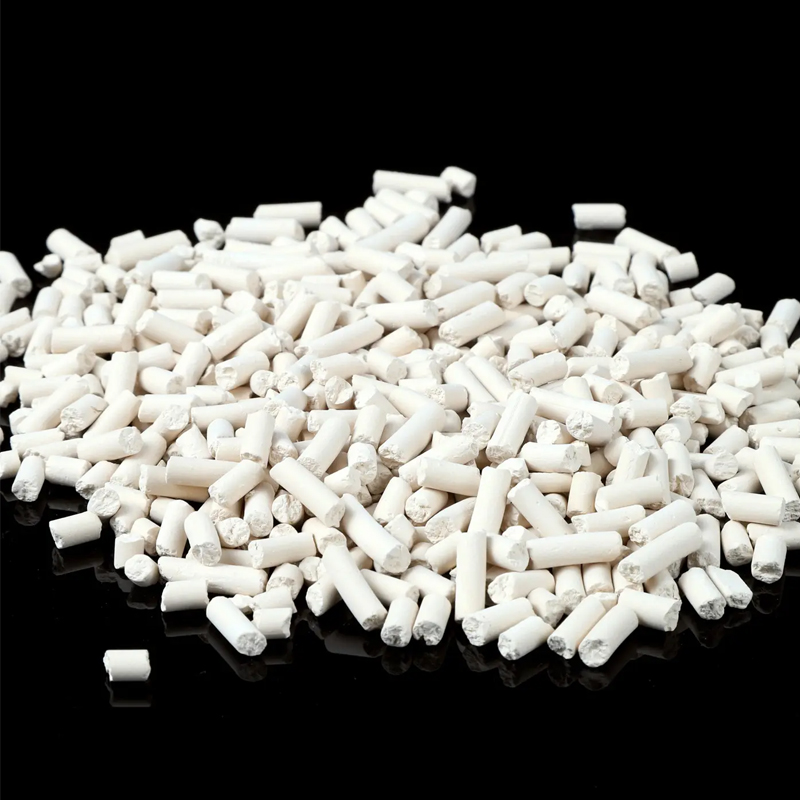
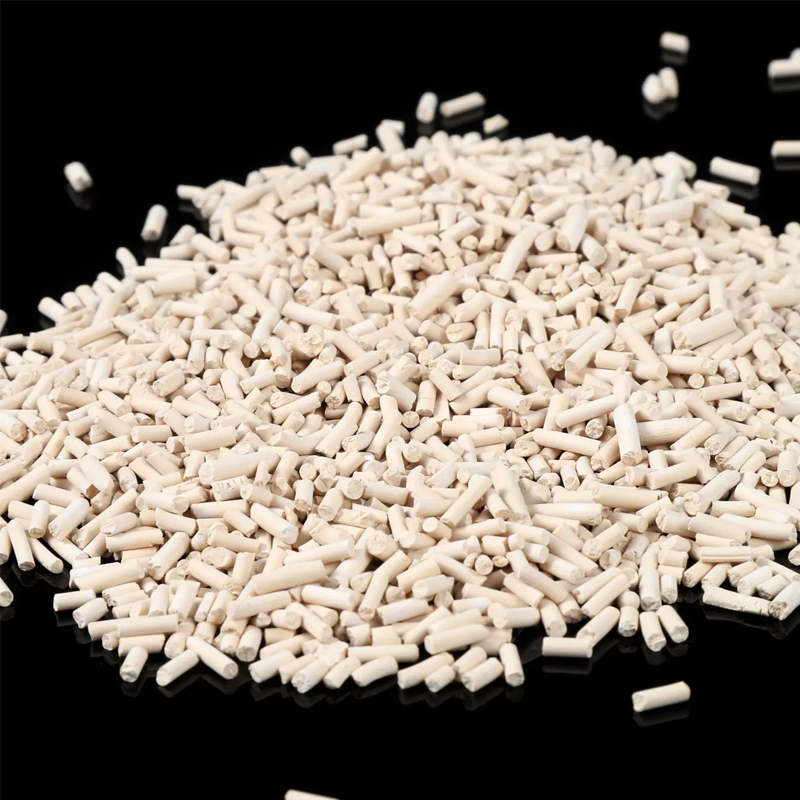
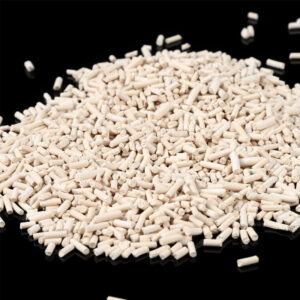
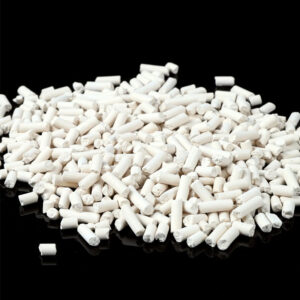
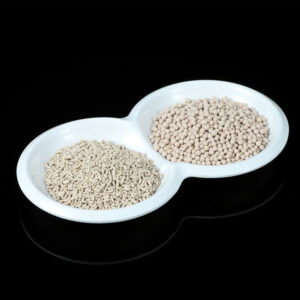
Common particle sizes are 1–3mm, 3–5mm, and 5–8mm. Small particles have a large specific surface area but a high pressure drop, while large particles have a low pressure drop but a slightly lower adsorption efficiency. They need to be matched according to the tower diameter and flow rate.
New molecular sieves need to be activated before use (to remove the moisture adsorbed during storage), with an activation temperature of 250–300°C for more than 2 hours.
Avoid direct contact with oils and liquid water (to prevent “liquefaction heat release” from causing particle explosion), and transportation and storage must be sealed and moisture-proof.
|
Model |
3A |
|||
|
Color |
Light gray |
|||
|
Nominal pore diameter |
3 angstroms |
|||
|
Shape |
Sphere |
Pellet |
||
|
Diameter (mm) |
1.7-2.5 |
3.0-5.0 |
1.6 |
3.2 |
|
Size ratio up to grade (%) |
≥98 |
≥98 |
≥96 |
≥96 |
|
Bulk density (g/ml) |
≥0.72 |
≥0.70 |
≥0.66 |
≥0.66 |
|
Wear ratio (%) |
≤0.20 |
≤0.20 |
≤0.2 |
≤0.2 |
|
Crushing strength (N) |
≥55/piece |
≥85/piece |
≥30/piece |
≥40/piece |
|
Static H2O adsorption (%) |
≥21 |
≥21 |
≥21 |
≥21 |
|
Ethylene adsorption (‰) |
≤3.0 |
≤3.0 |
≤3.0 |
≤3.0 |
|
Water content (%) |
≤1.5 |
≤1.5 |
≤1.5 |
≤1.5 |
|
Typical Chemical Formula |
0.4K2O . 0.6Na2O . Al2O3 . 2SiO2 . 4.5 H2O
SiO2 : Al2O3 ≈2 |
|||
|
Typical Application |
a) Drying of unsaturated hydrocarbons (e.g. ethylene, propylene, butadien)
b) Cracked Gas Drying c) Drying of natural gas, if COS minimization is essential, or a minimum co-adsorption of hydrocarbons is required. d) Drying of highly polar compounds, such as methanol and ethanol e) Drying of liquid alcohol f) Static, (non-regenerative) dehydration of insulating glass units, whether air filled or gas-filled. g) Drying of CNG. |
|||
1. Regeneration Principle and Method
The adsorption capacity of 3A molecular sieves is reversible. When adsorption reaches saturation, it can be regenerated by heating and desorption:
Regeneration Conditions: A hot gas (such as nitrogen or dry air) at 200–350°C is introduced to desorb adsorbed water molecules, restoring adsorption activity.
Regeneration Process: Heating → Constant Temperature Desorption (2–4 hours) → Cooling → Resuming Service Life.
2. Service Life
Theoretical Service Life: With proper use and regeneration, it can be regenerated repeatedly for 5–10 years, and the crystal structure is not susceptible to degradation.
Influencing Factors:
Operating Temperature: Prolonged exposure above 600°C can cause lattice collapse and permanent loss of activity.
Impurity Contamination: Media containing oil, tar, strong acids, or alkalis can clog the pores or damage the molecular sieve, shortening its service life.
Regeneration Frequency: Frequent regeneration may cause particle breakage due to thermal stress, so regeneration temperature fluctuations must be controlled.