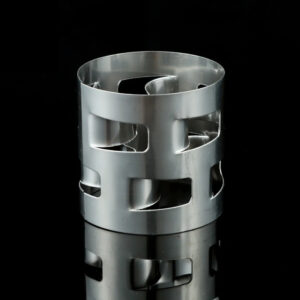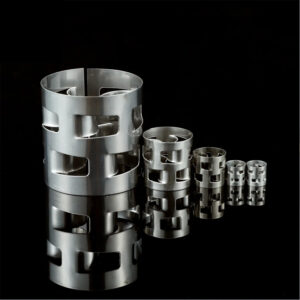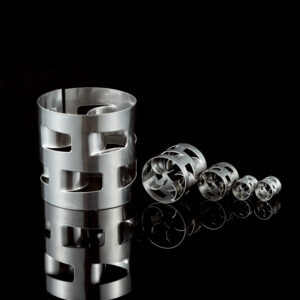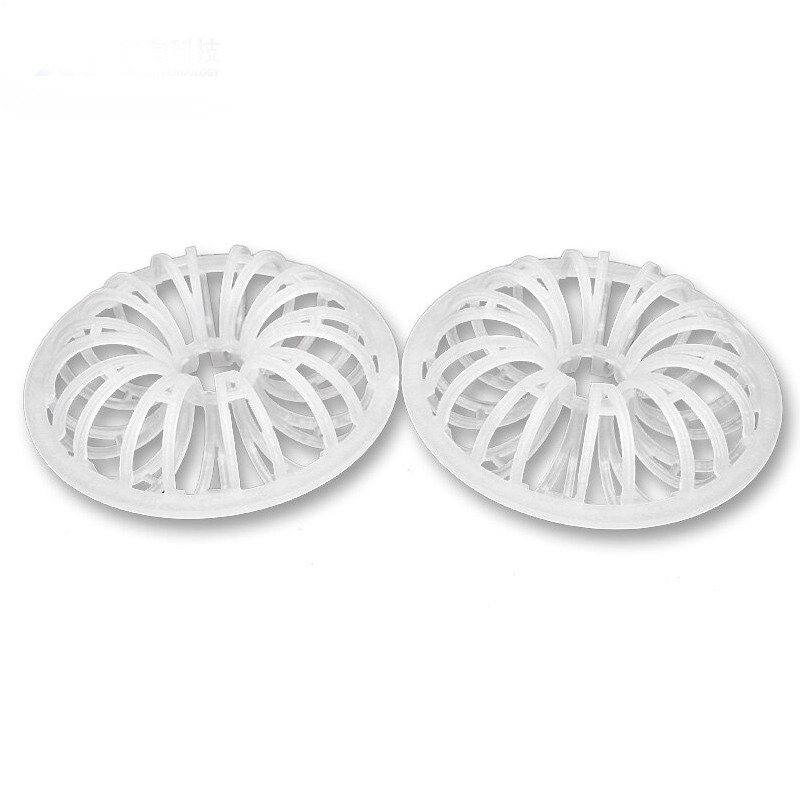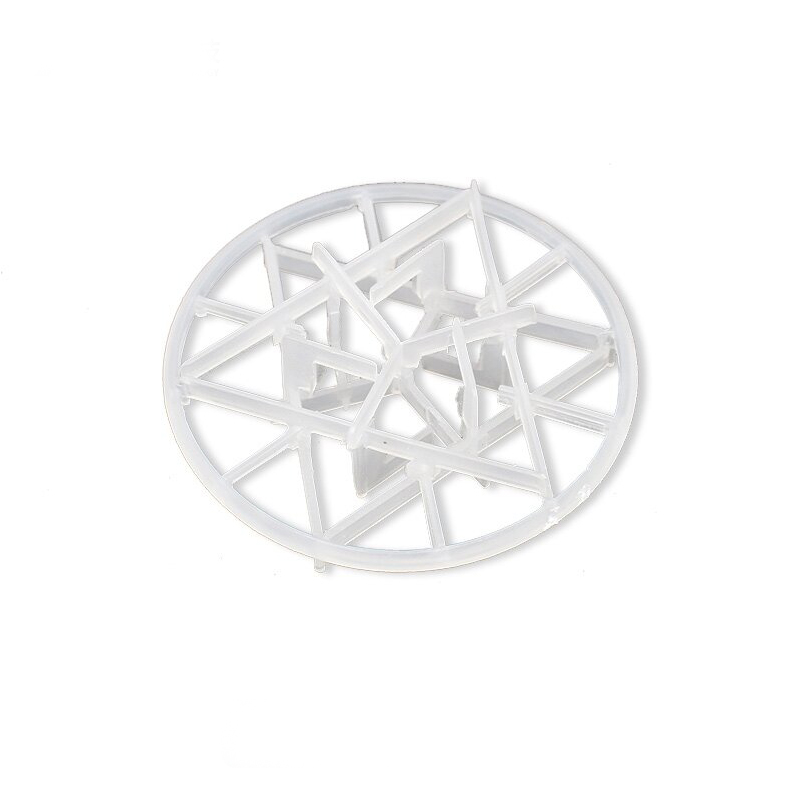
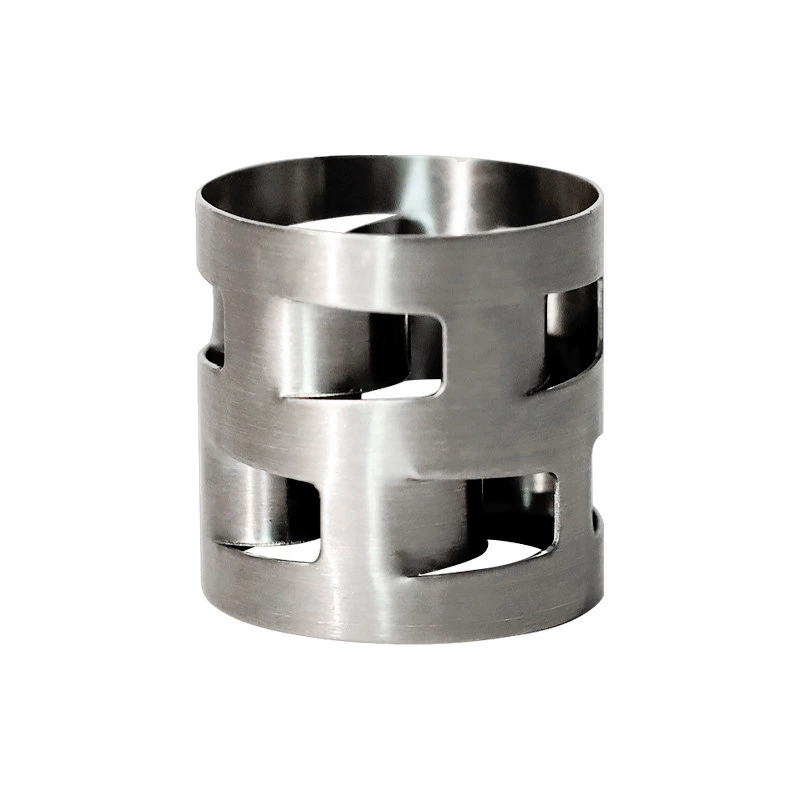
The open architecture and internal reinforcements yield an increased effective surface area, reaching up to 200 m²/m³, which surpasses that of Raschig Rings, thereby enhancing mass transfer.
Reduced resistance to fluid flow lowers energy consumption in pumps or compressors.
The design optimizes for the reduction of channeling, ensuring a uniform distribution of liquid.
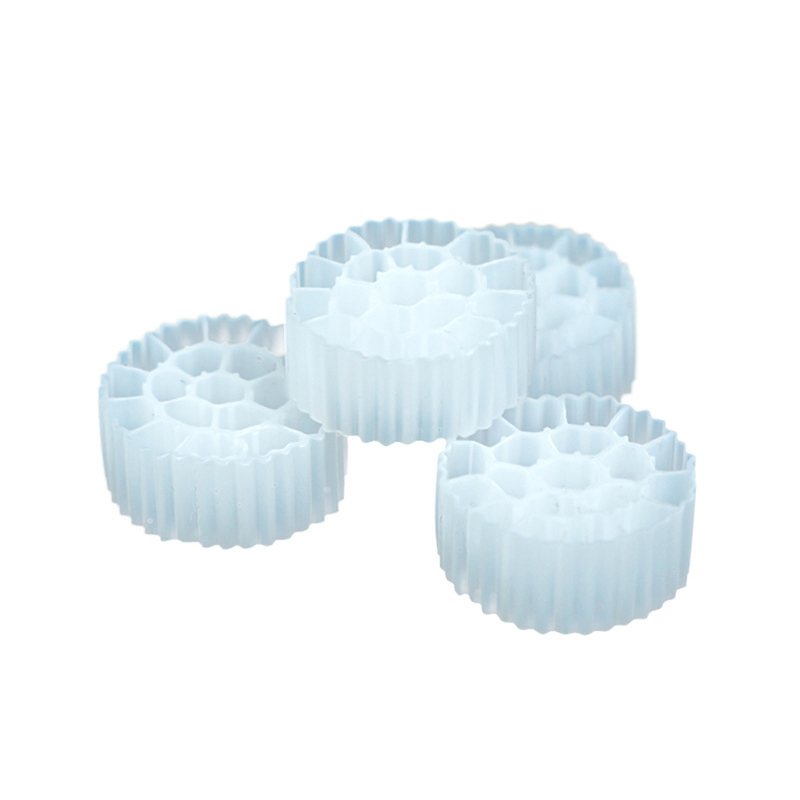
Ceramic materials exhibit a high degree of resistance to degradation, thereby prolonging their operational lifespan under severe environmental conditions.
|
Size |
Bulk density |
Number |
Surface area |
Free volume |
Dry Packing Factor m-1 |
|
|
1/4” |
6*6*0.3 |
900 |
4000000 |
904 |
88.6 |
1307.4 |
|
3/8” |
10*10*0.3 |
480 |
768000 |
482 |
93.8 |
583.8 |
|
1/2” |
13*13*0.3 |
420 |
410000 |
415 |
4.8 |
489.2 |
|
5/8” |
16*16*0.3 |
348 |
201000 |
344 |
95.5 |
393.2 |
|
1” |
25*25*0.4 |
288 |
53500 |
212 |
96.2 |
229.8 |
|
1” |
25*25*0.5 |
367 |
53500 |
216 |
95 |
237.2 |
|
1” |
25*25*0.6 |
439 |
53500 |
219 |
94.2 |
244.1 |
|
1.5” |
38*38*0.4 |
193 |
15180 |
143 |
97.2 |
148.4 |
|
1.5” |
38*38*0.5 |
246 |
15180 |
145 |
96.7 |
151.7 |
|
1.5” |
38*38*0.6 |
328 |
15000 |
146 |
95.9 |
154.6 |
|
2” |
50*50*0.5 |
185 |
6500 |
106 |
97.5 |
128.5 |
|
2” |
50*50*0.8 |
315 |
6500 |
108 |
96.8 |
130.5 |
|
2” |
50*50*1.0 |
380 |
6500 |
132.5 |
96.0 |
134.0 |
|
3” |
76*76*1.0 |
265 |
1920 |
69 |
97.4 |
79.6 |
|
3.5” |
89*89*1.0 |
224 |
1220 |
61 |
97.1 |
66.2 |
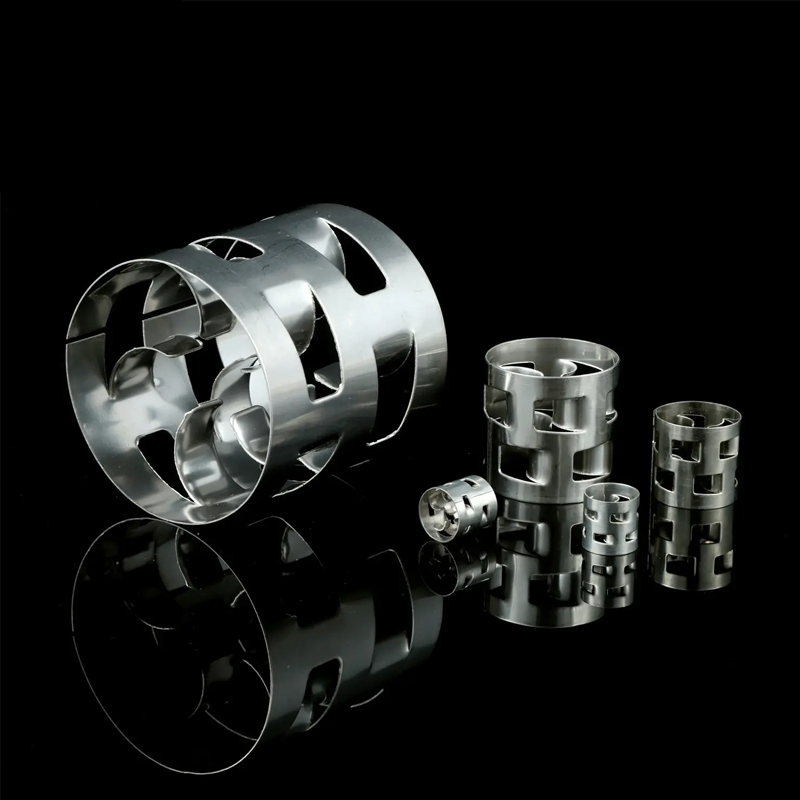
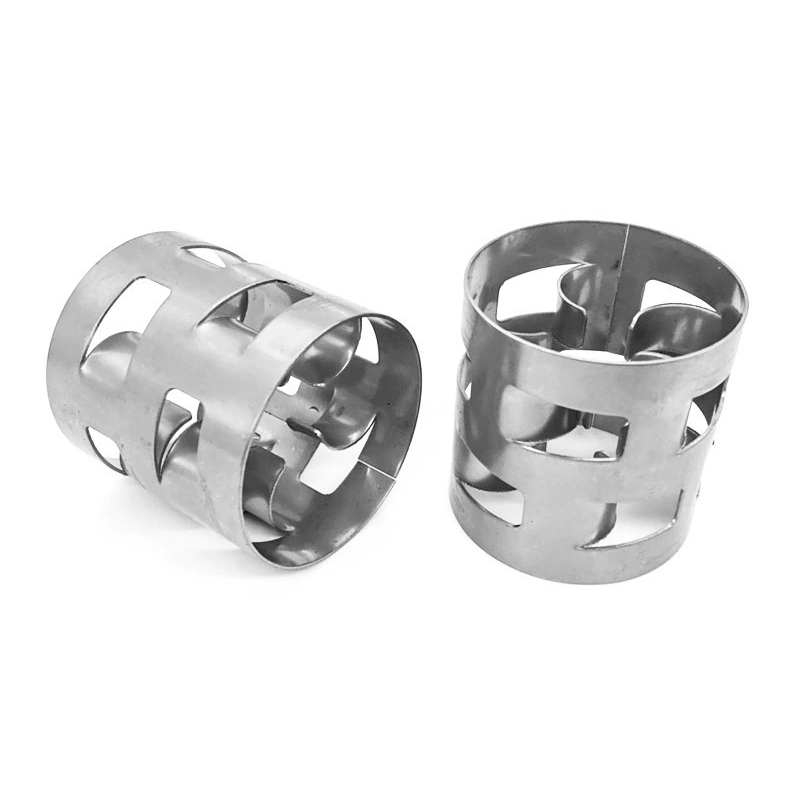
The design of metal Pall rings is based on the improvements of traditional Raschig rings, and the core structural features include:
Basic Form: A hollow cylinder composed of slender metallic sheets, including materials such as stainless steel, carbon steel, and alloys, characterized by a height and diameter that are approximately equivalent, with standard dimensions typically ranging from 16mm to 100mm.
Key Improvement: Multi-layer rectangular or trapezoidal windows are opened on the cylindrical walls, bending the metal sheets in the window inward/outward to form “fingers”, which not only retains the overall strength of the ring and greatly improves the opening rate.
Symmetry: The geometric structure is symmetrical and uniform, ensuring stable distribution of fluids in the filler layer and reducing bias flow or dead volume.