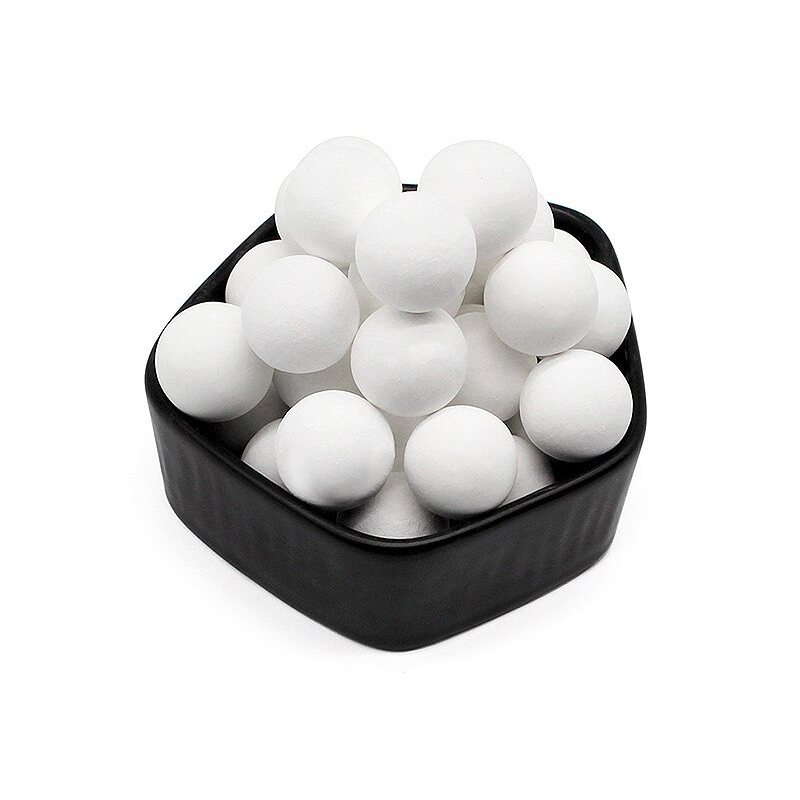
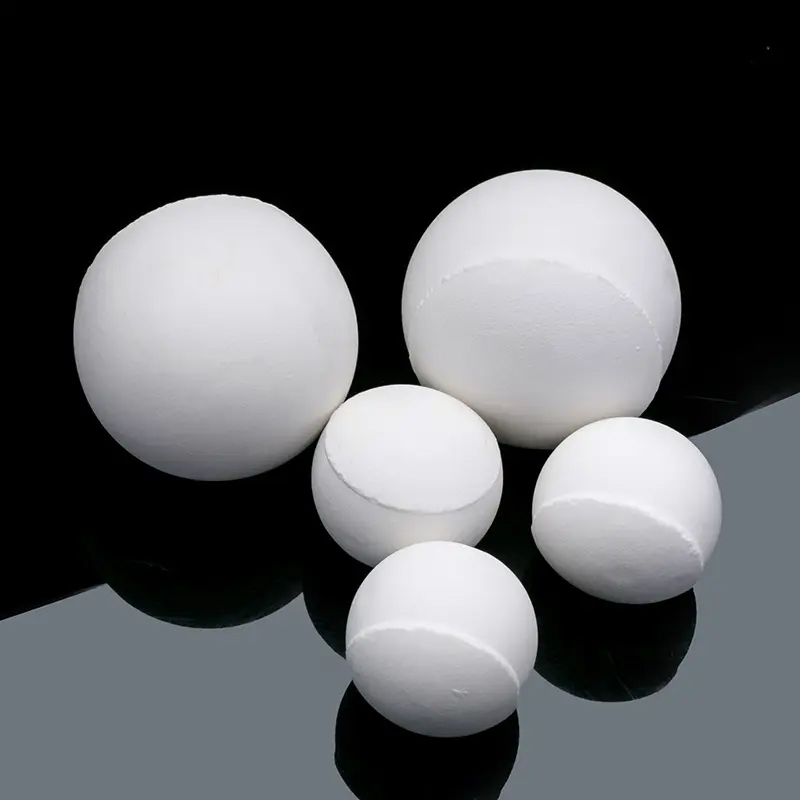
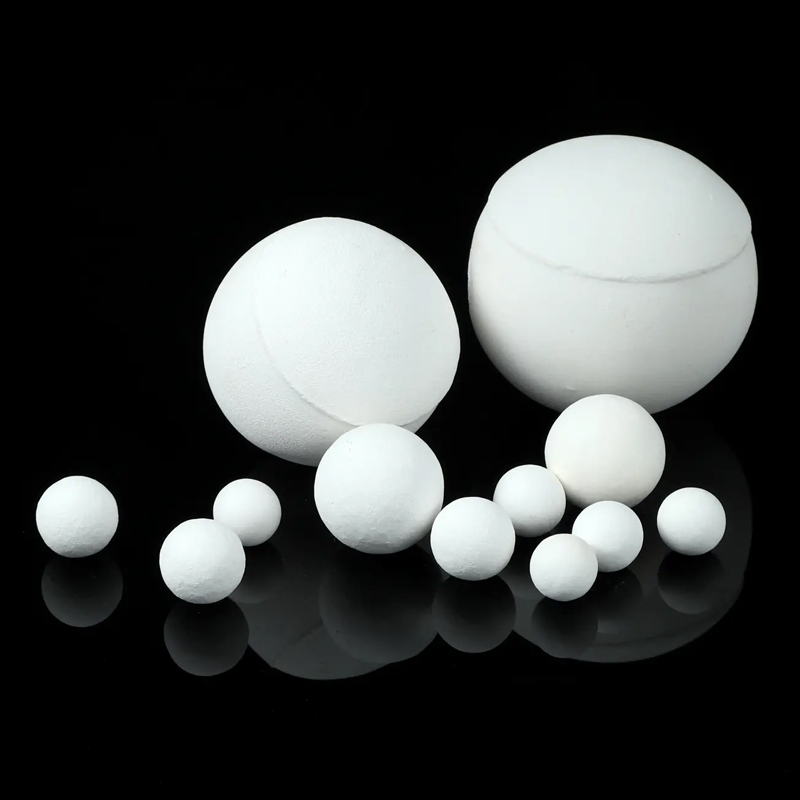
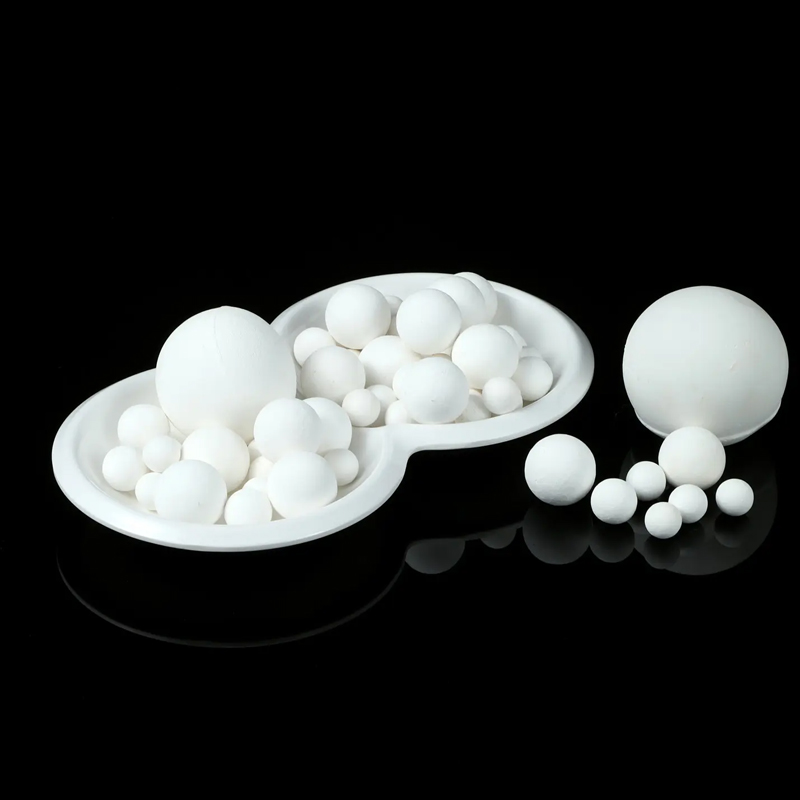
60%-65% alumina content, suitable for processing non-metallic mineral powders.
with an alumina content of 75%-80%, they are particularly suitable for grinding quartz powder, especially high-hardness, high-white quartz, and can significantly reduce contamination and improve grinding efficiency.
with an alumina content of over 90%, further subdivided into 90 ceramic, 92 ceramic, 95 ceramic and 99 ceramic.
mainly composed of alumina, zirconium oxide, etc., have high hardness, good wear resistance, stable chemical properties, and are not prone to reacting with materials. They are suitable for fine grinding and applications with high material requirements.
1、Wear resistance:The wear resistance of grinding balls is one of their key performance indicators, directly affecting their service life and grinding efficiency. High-alumina balls are highly favored due to their high hardness and high wear resistance.
2、Corrosion resistance: Grinding balls may come into contact with various highly acidic or alkaline materials during the grinding process, therefore they need to have good corrosion resistance. Ceramic grinding balls perform excellently in this regard.
3、Chemical stability: Grinding balls should be chemically stable and not easily react with materials to avoid contaminating them. Non-metallic grinding balls, such as ceramic balls, have an advantage in this regard.
4、Density and hardness: The density and hardness of the grinding balls affect their grinding effect and filling density. Generally speaking, the larger the grinding ball, the lower the filling density and the weaker the grinding effect; while smaller grinding balls have a higher filling density and a better grinding effect.
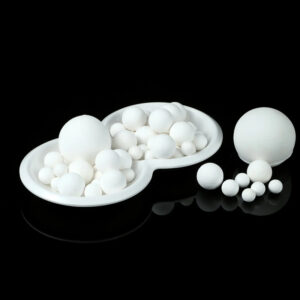
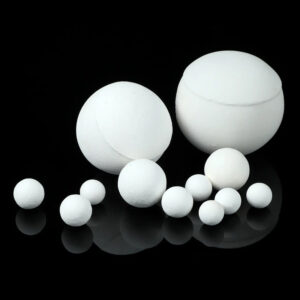
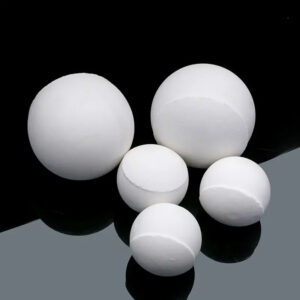
| Product | Al2O3 % | Bulk density g/cm2 |
Water absorption |
Mohs Hardness scale | Abrasion loss % | Color | |
| High Alumina Grinding Balls | 92 | 3.65 | 0.01 | 9 | 0.011 | White | |
| Medium Alumina Grinding Balls | 65-70 | 2.93 | 0.01 | 8 | 0.01 | Yellow-White | |
| Appearance Demand | |||||||
| High Alumina Grinding Balls | Medium Alumina Grinding Balls | ||||||
| Crack | Not Permission | Not Permission | |||||
| Impurity | Not Permission | Not Permission | |||||
| Foam hole | Above 1mm not permission, size in 0.5mm permit 3 balls. | ||||||
| Flaw | Max. size in 0.3mm permit 3 balls | ||||||
| Advantage | High Alumina Content b)High density c)High Hardness d)High Wearing Feature |
||||||
| Warranty: | By National Standard HG/T 3683.1-2000 b) Offer lifetime consultation on problems occurred |
||||||