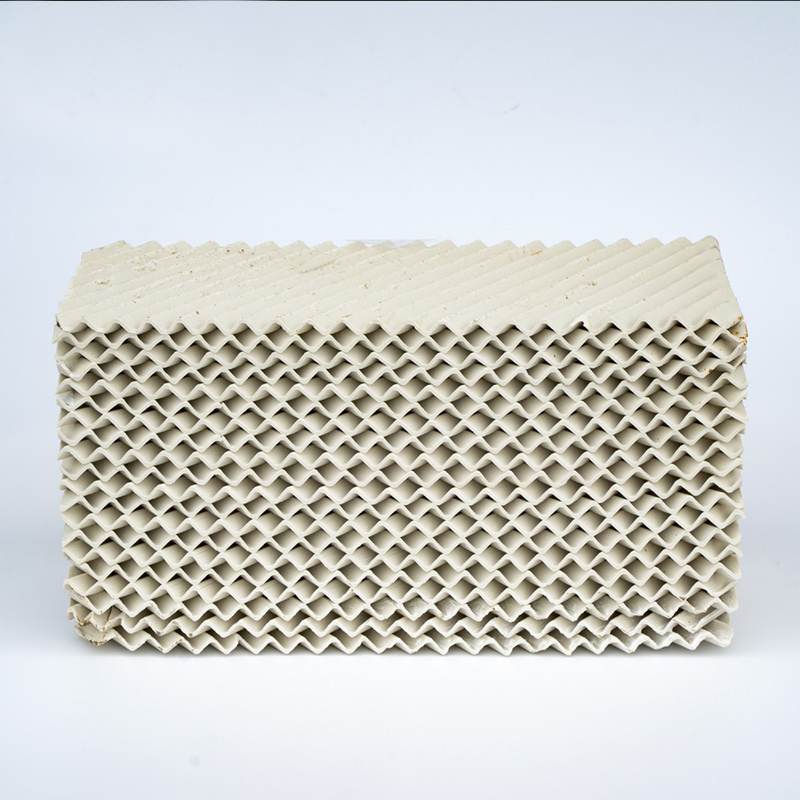
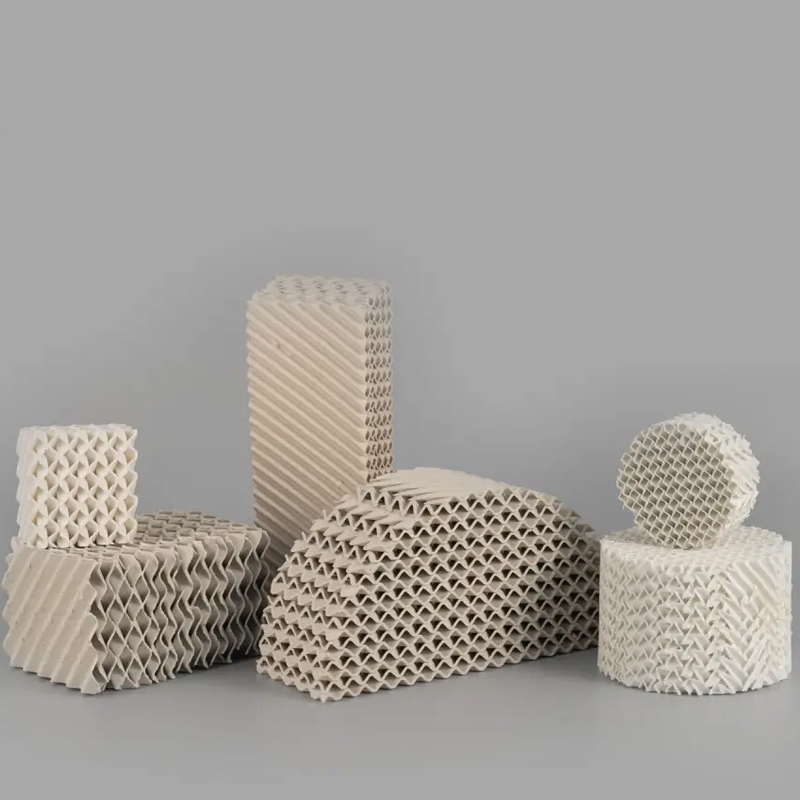
It can withstand a temperature range of -10℃ to 1000℃, with an acid resistance of ≥99.8% and an alkali resistance of ≥88%. It is suitable for highly corrosive, high-temperature and high-pressure working conditions.
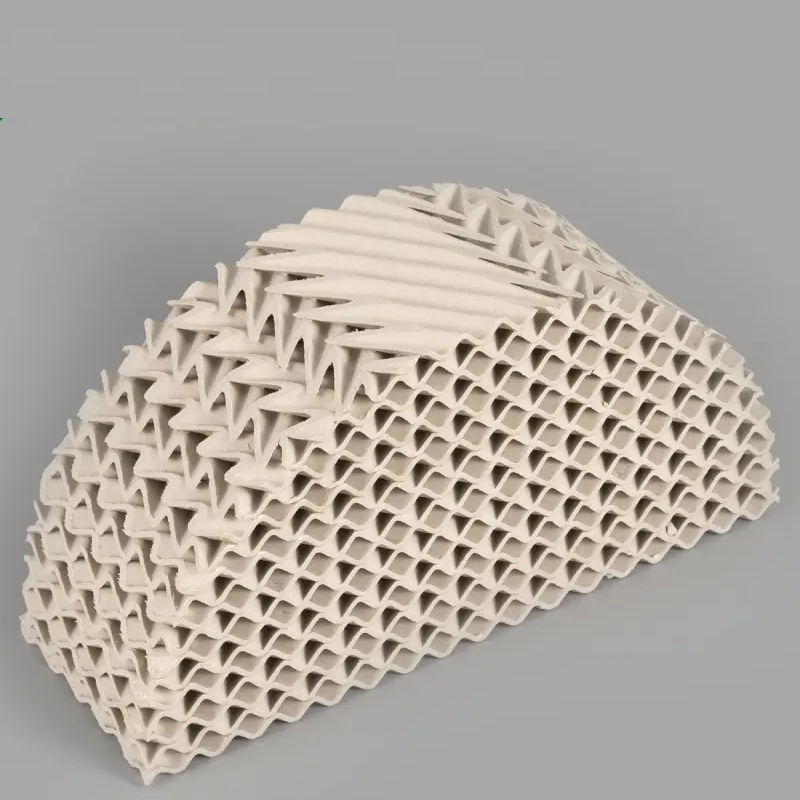
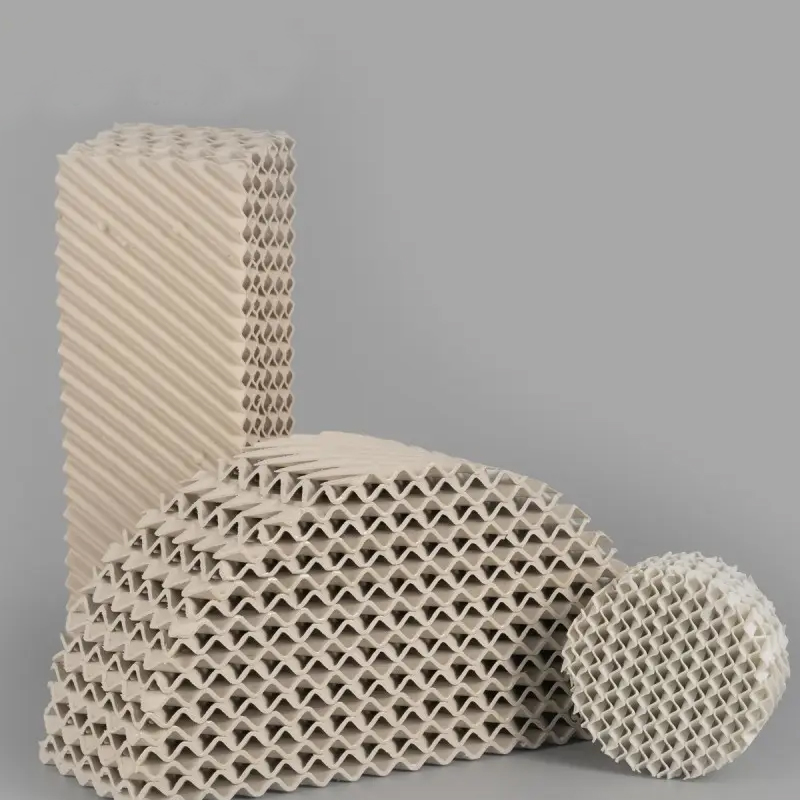
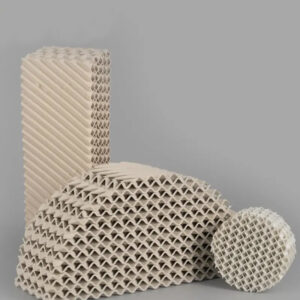
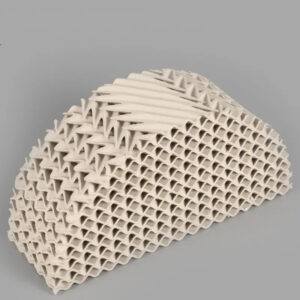
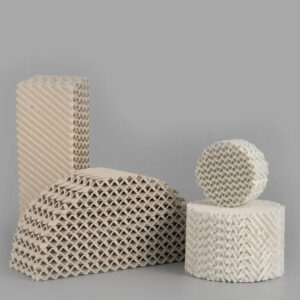
The corrugated structure design results in a large specific surface area (commonly used specifications ≥250m²/m³) and a high porosity, promoting thorough contact between gas and liquid phases, reducing pressure drop and enhancing separation efficiency.
With a rough and hydrophilic surface, it can be used as a catalyst carrier, heat exchanger component or demister, and is suitable for special processes such as vacuum operation (absolute pressure ≥100Pa).
|
Spec |
Specific surface (m2/m3) |
Bulk density (kg/ m3) |
Void ratio (%) |
Obl Angle |
Pressure drop (mm Hg/m) |
Theo. Plate (m-1) |
Hydraulic diameter (mm) |
Liquid load (m3/m2h) |
Max. Factor m/s (Kg/m3)-1 |
|
125Y |
125 |
320 |
90 |
45 |
1.8 |
1.8 |
28 |
0.2-100 |
3.0 |
|
250Y |
250 |
420 |
80 |
45 |
2 |
2.5 |
12 |
0.2-100 |
2.6 |
|
350Y |
350 |
470 |
78 |
45 |
2.5 |
2.8 |
10 |
0.2-100 |
2.5 |
|
450Y |
450 |
520 |
72 |
45 |
4 |
4 |
7 |
0.2-100 |
1.8 |
|
550Y |
550 |
620 |
74 |
45 |
5.5 |
5-6 |
6 |
0.18-100 |
1.4 |
|
700Y |
700 |
650 |
72 |
45 |
6 |
7 |
5 |
0.15-100 |
1. High-temperature tolerance:
Exhibits consistent operational stability at elevated temperatures, typically ranging from 1,200 to 1,400°C, contingent upon the specific ceramic composition. It is particularly suited for high-temperature separation processes, such as those encountered in petrochemical distillation.
2. Low thermal expansion
Minimal thermal expansion coefficient, reducing the risk of cracking or deformation under temperature fluctuations.
3. High compressive strength
The compressive strength typically ranges from 15 to 30 megapascals to ensure it can endure the weight of overlying packing layers and process loads without succumbing to collapse.
4. Wear resistance
Hard surface texture resists abrasion from fluid flow or solid particles, ensuring long service life.
5. High surface area
Structured geometric designs provide large specific surface areas maximizing contact between gas and liquid phases for efficient mass transfer.
6. Porosity
Controlled porosity balances mechanical strength and mass transfer efficiency; some grades have high porosity for enhanced adsorption.