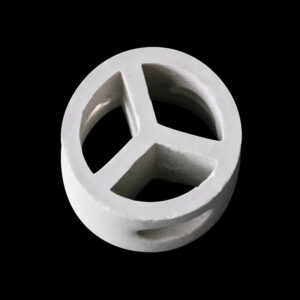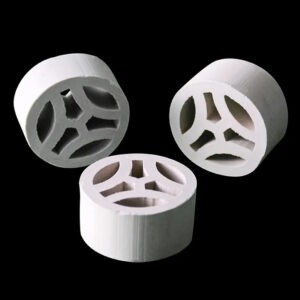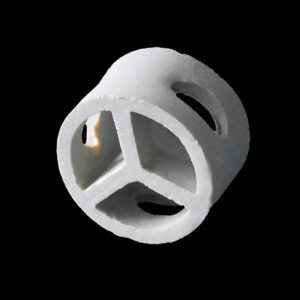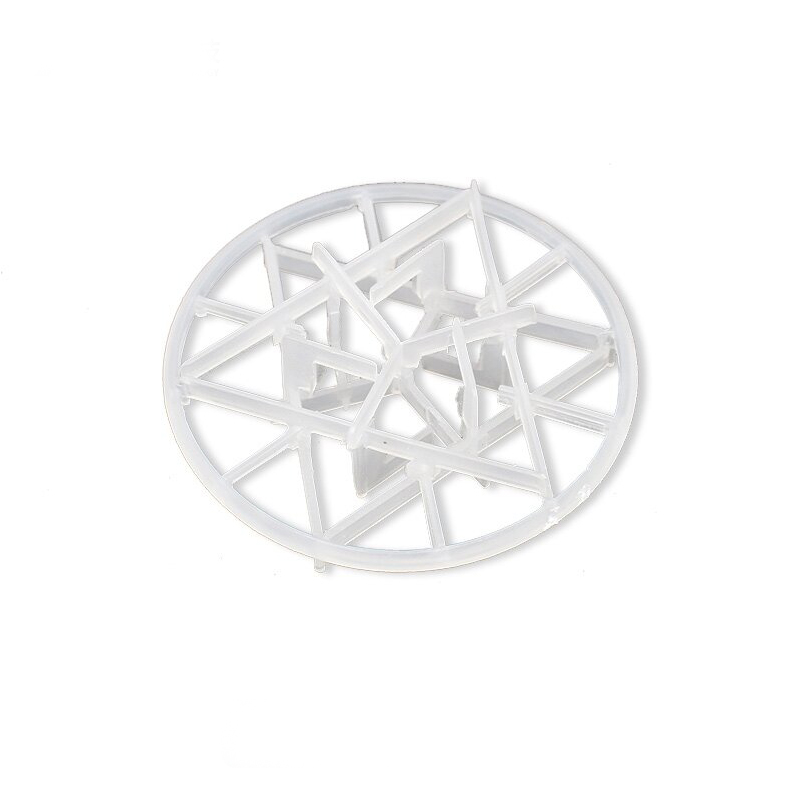
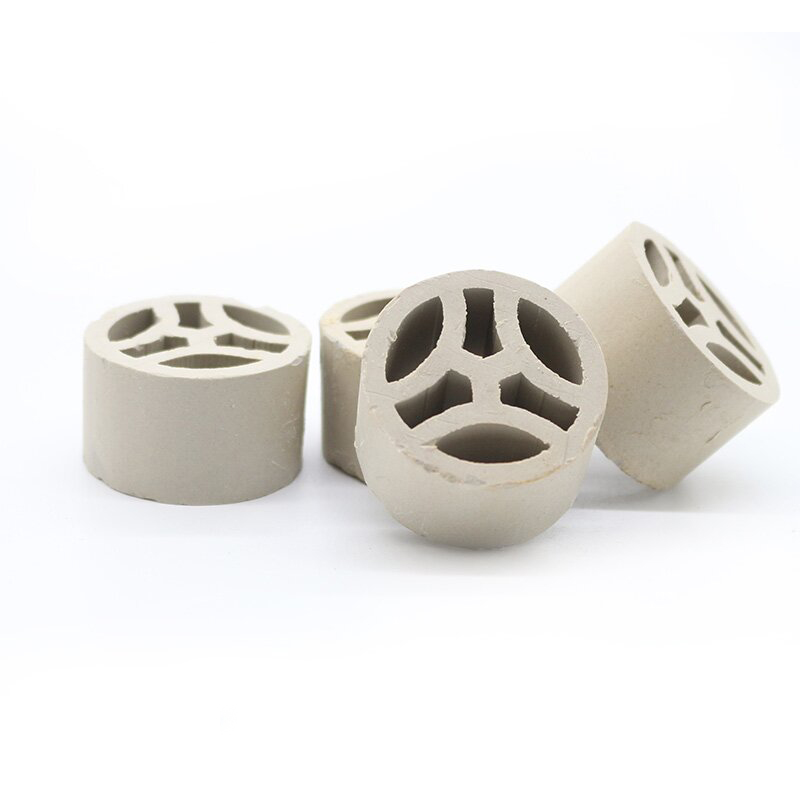
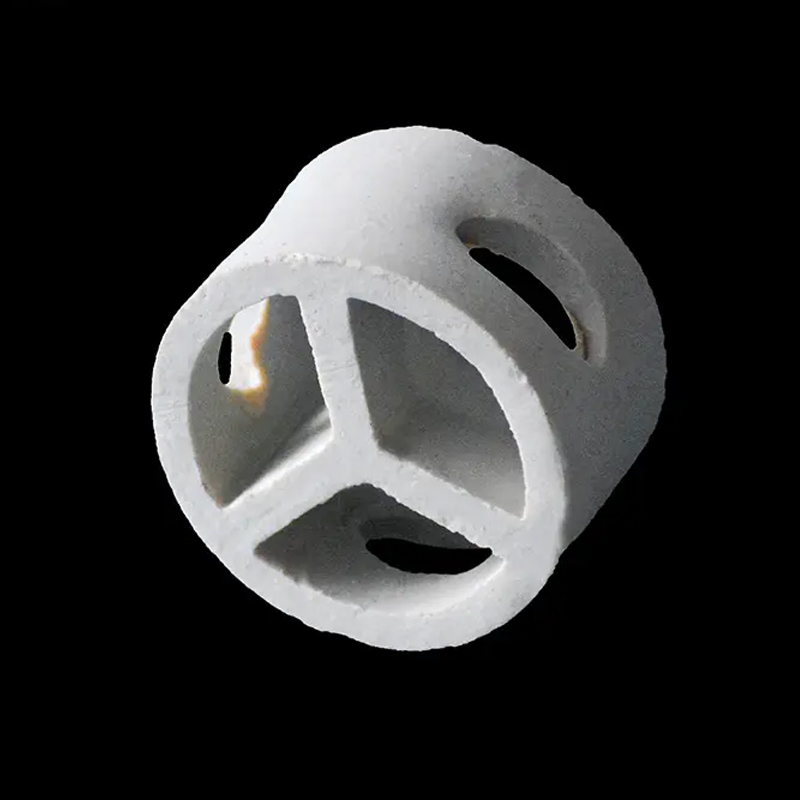
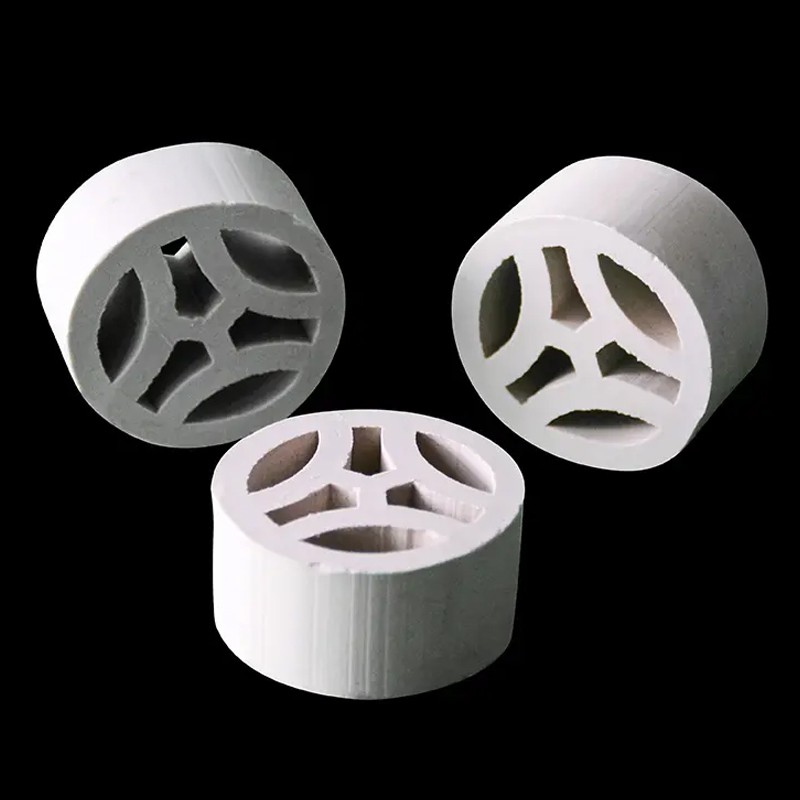
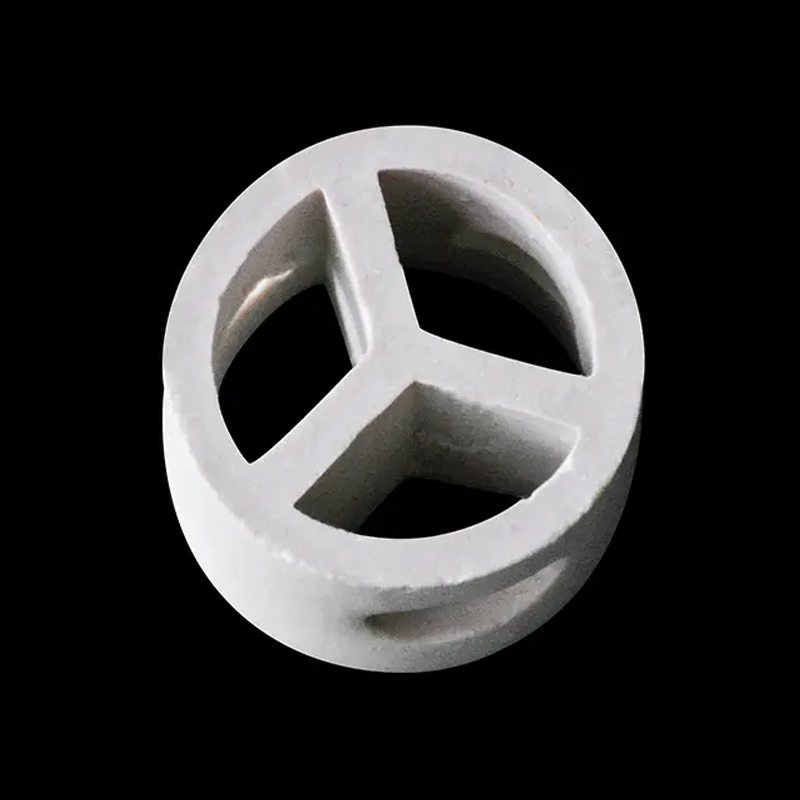
The ceramic Y type partition ring has a uniquely designed appearance with a height-to-diameter ratio of approximately 2:1 and one or three “Y”-shaped partitions inside.
The structure of the ceramic Y type partition ring increases the specific surface area, improves the vapor-liquid dispersion performance, and makes the vapor-liquid contact more complete.
SiO₂, Al₂O₃, etc., among which the SiO₂ content is greater than 70%, the Al₂O₃ content is 17%-23%, and it also contains a small amount of Fe₂O₃, CaO, MgO, etc.
It has high chemical stability and strong acid resistance, with an acid resistance rate greater than 99.6%. Except for hydrofluoric acid, it can resist corrosion from various inorganic acids, organic acids and organic solvents.
25mm, 38mm, 50mm, 80mm, etc., and can also be customized according to working conditions.
|
Type |
Dimension(mm) |
Surface area(m2/m3) |
Void rate % |
Bulk Density kg/m3 |
Bulk Numbers Per M3 |
Dry packing Factor(m-1) |
|
φ25 |
25*13*2 |
240 |
74 |
760 |
87000 |
390 |
|
φ38 |
38*20*3 |
160 |
75 |
740 |
27600 |
260 |
|
φ50 |
50*30*4 |
138 |
75 |
745 |
10100 |
233 |
|
φ80 |
80*50*9 |
90 |
70 |
710 |
1910 |
262 |
In a tower-type device, gas enters from above the packing and, through the packing’s porous channels, comes into full contact with the liquid entering from below. Solutes in the gas are absorbed by the liquid, achieving gas-liquid mass transfer. The unique structure of the ceramic three-ring system increases the gas-liquid contact area and contact time, thereby improving mass transfer efficiency.