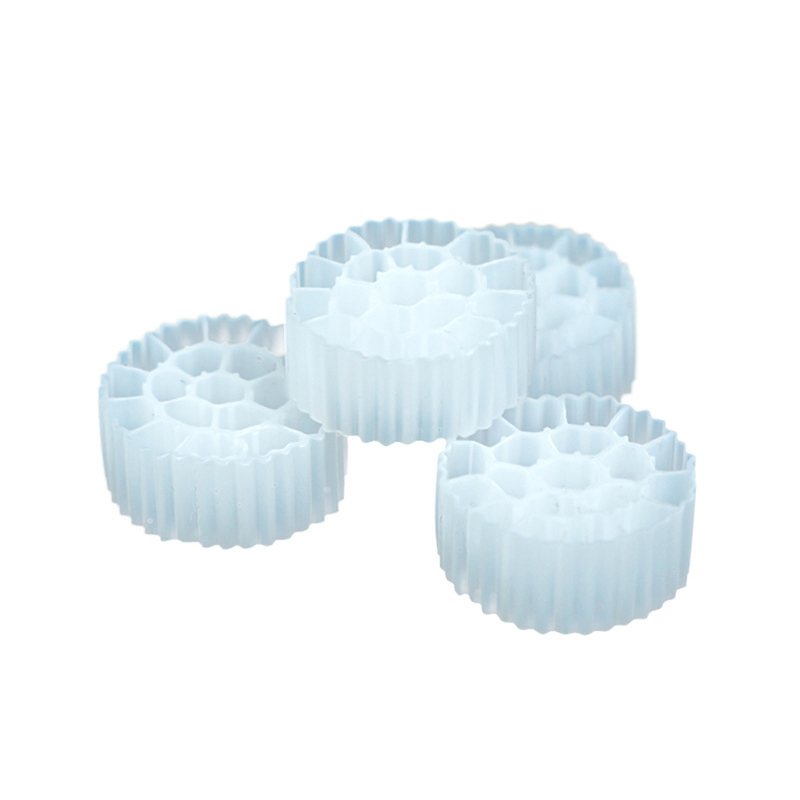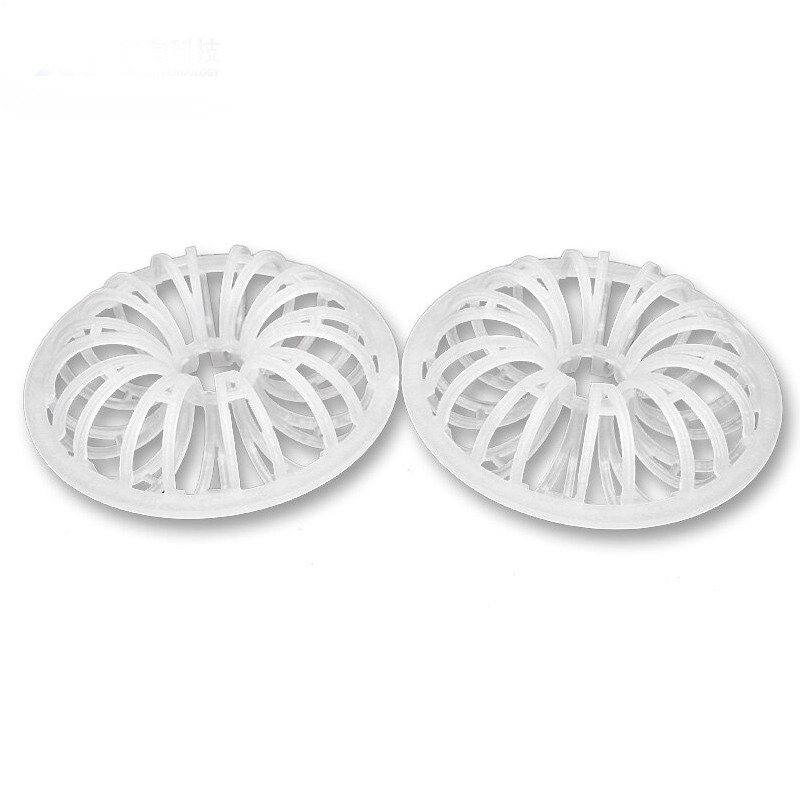
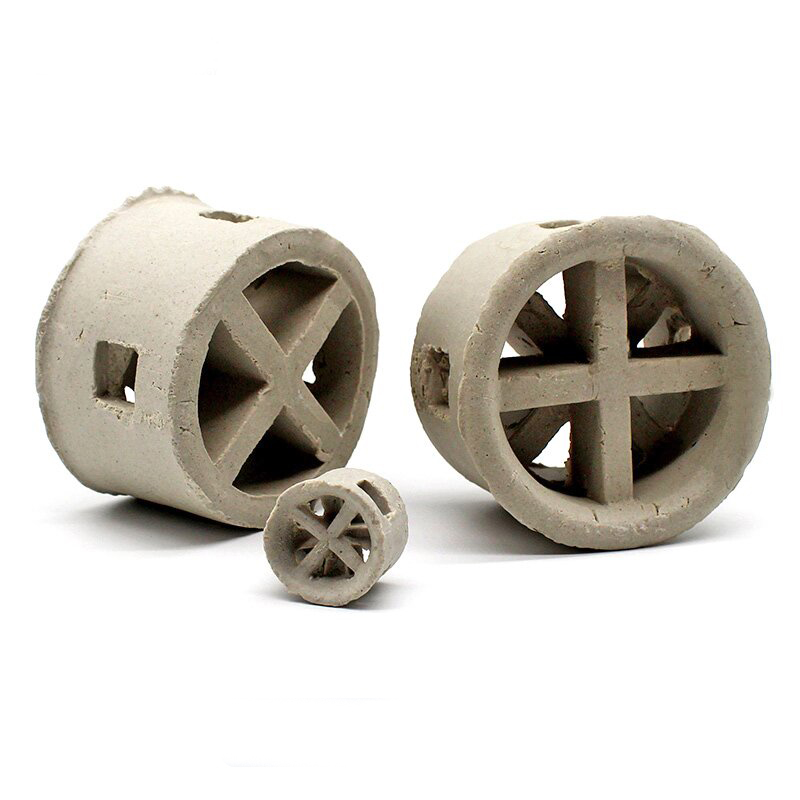
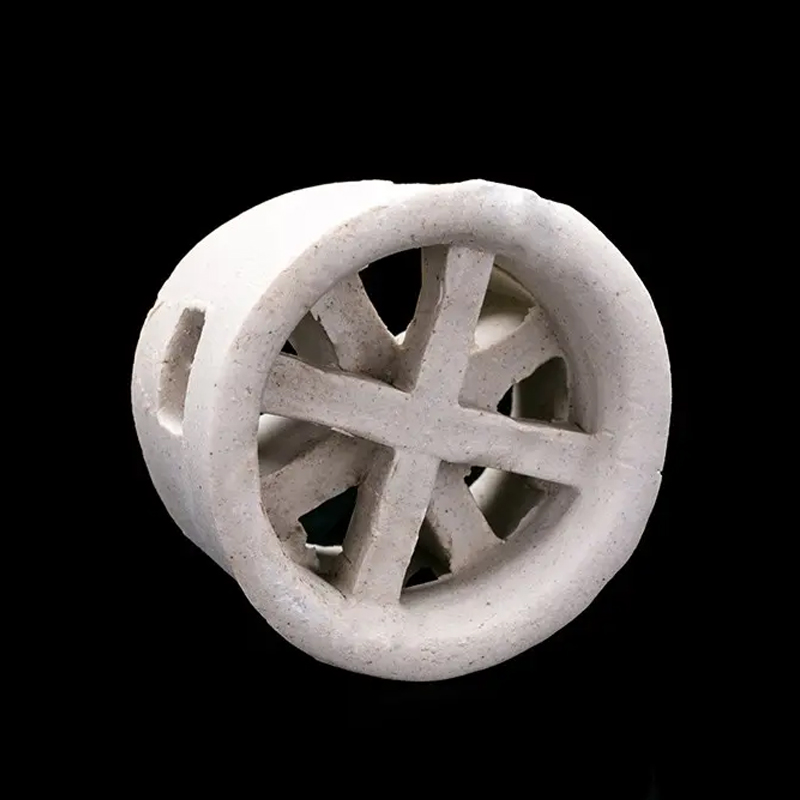
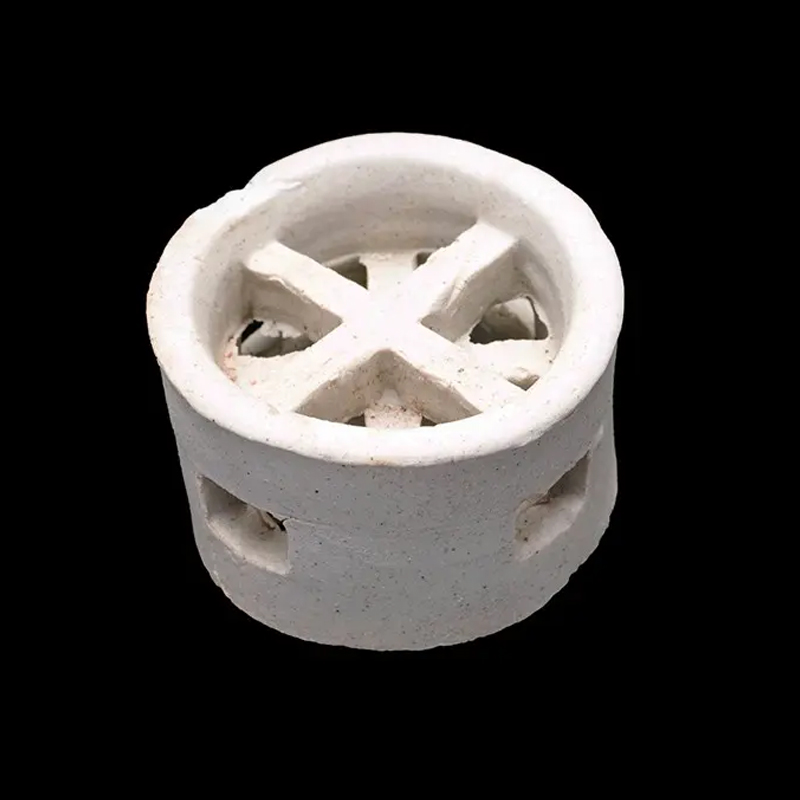
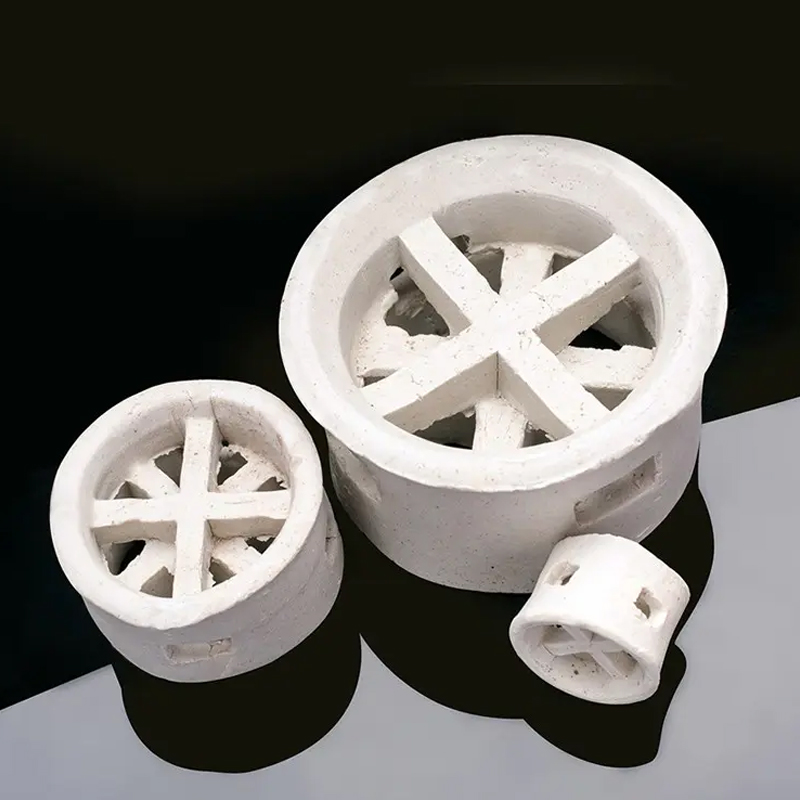
The filler height is approximately 1/2 to 1/3 of its diameter, and the edge features multiple stepped protrusions, increasing the filler’s surface area and mechanical strength.
The ring structure is retained, but the height is reduced to reduce gas flow resistance.
Made from ceramics (such as alumina and silicon carbide) through extrusion or press-sintering processes, it features a rough surface and is corrosion-resistant and high-temperature resistant.
|
Size |
OD*ID*H*T (mm) |
Weight per M3 (kg/m3) |
Number per M3 (Pcs/m3) |
Surface Area (m2/m3) |
Dry packing factor m-1 |
|
10mm |
10*6*8*2 |
800 |
750000 |
420 |
1250 |
|
2” (50mm) |
50*40*50*5 |
600 |
6500 |
145 |
565 |
|
3” (80mm) |
80*64*80*8 |
820 |
1950 |
120 |
356 |
|
4” (100mm) |
100*80*100*10 |
850 |
1000 |
110 |
252 |
|
5” (120mm) |
120*96*120*12 |
860 |
370 |
75 |
146 |
|
6” (150mm) |
150*120*150*15 |
980 |
296 |
60 |
101 |
Installation: Fill the packed tower with loose packing, ensuring even distribution to avoid areas of overcrowding that could lead to uneven flow. Ceramic packing is heavy, so the tower structure must be carefully considered for load-bearing capacity.
Maintenance: Regularly inspect the packing for blockage (especially when handling fluids containing solid particles). Severe blockage requires high-pressure water cleaning or replacement. Ceramic material aging (e.g., prolonged high-temperature thermal shock) can cause cracking, so regular assessment of structural integrity is required.
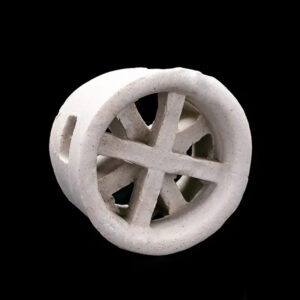
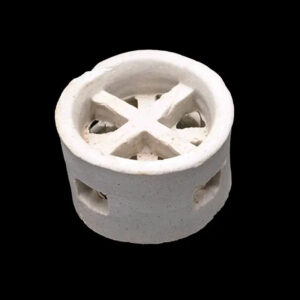
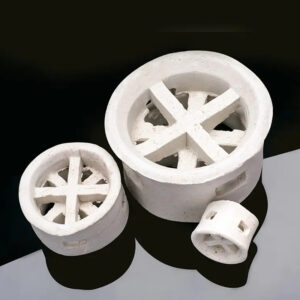
Ceramic Cascade Mini Ring packing is an ideal choice for mass transfer processes involving high-temperature, highly corrosive media. Its stepped structure optimizes mass transfer efficiency, and combined with the high-temperature and corrosion resistance of ceramic materials, it plays a key role in the chemical, environmental, and metallurgical industries. When selecting a packing, consider the balance between temperature resistance, corrosion resistance, and weight cost based on operating conditions (such as temperature, corrosiveness of the media, and flow rate) to achieve optimal mass transfer efficiency and equipment reliability.