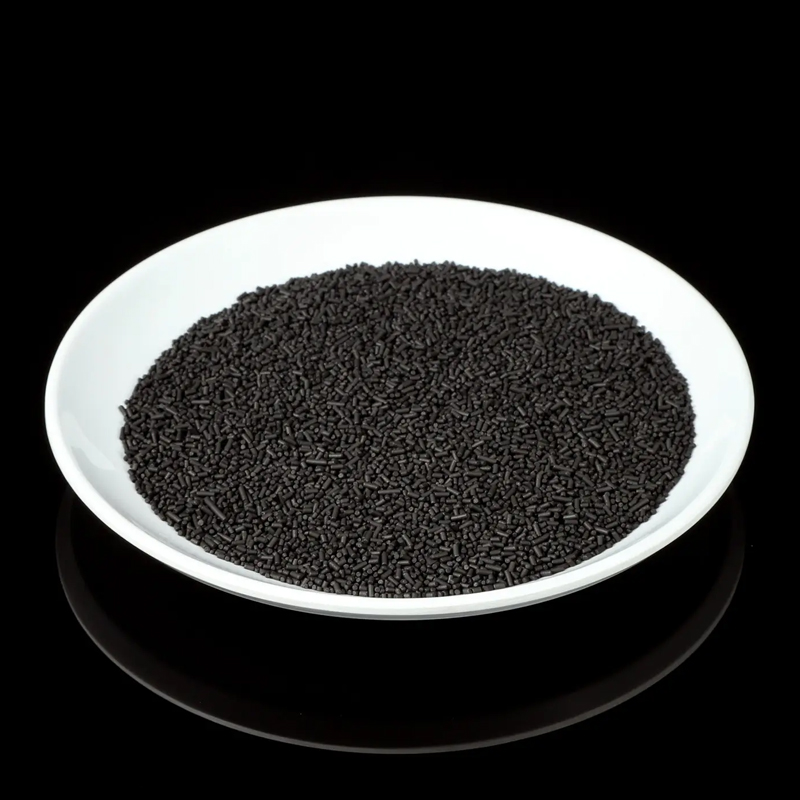
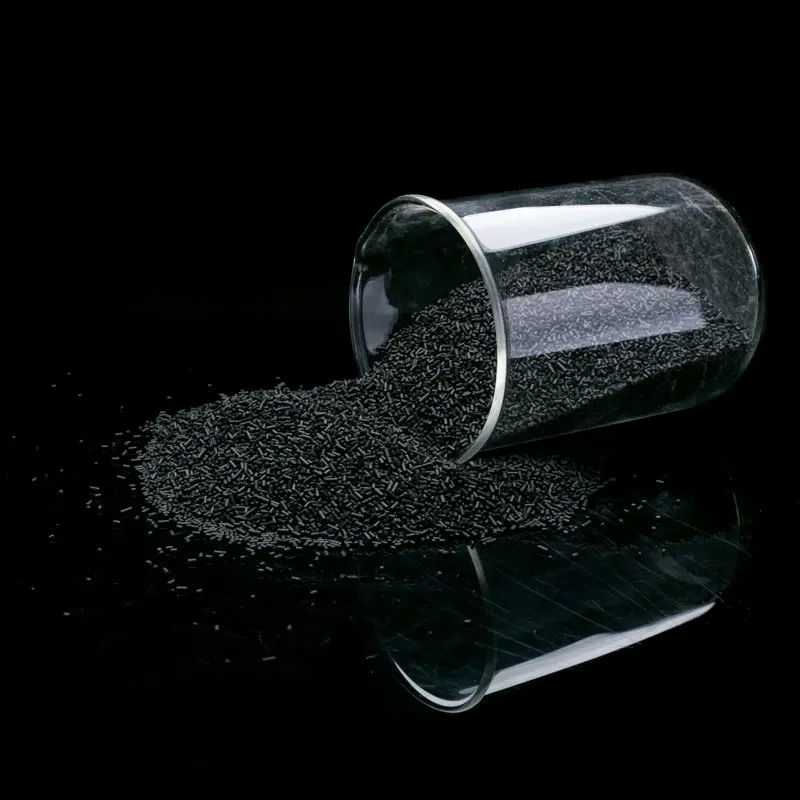
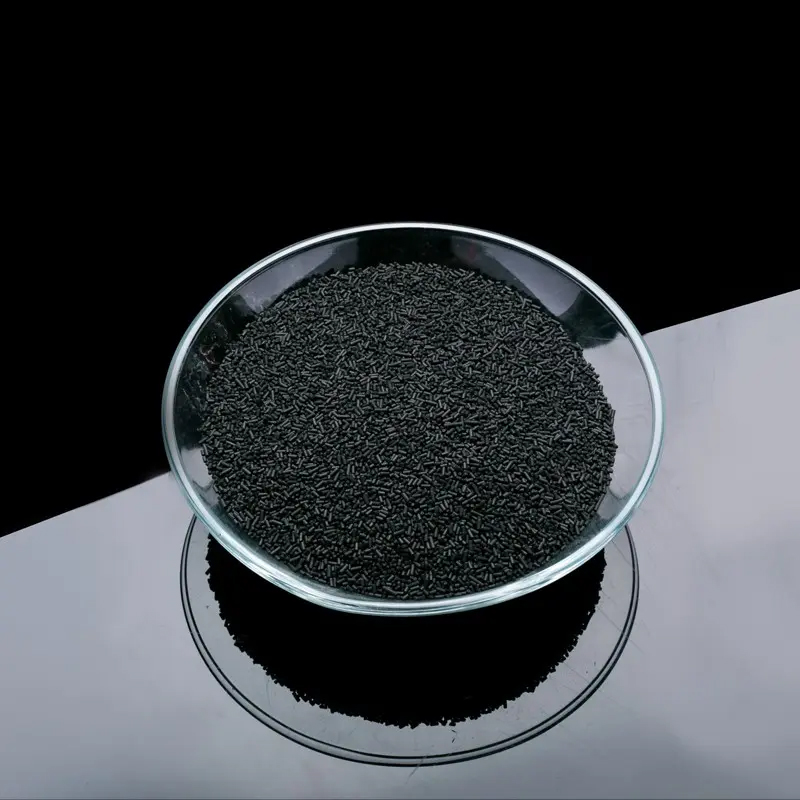
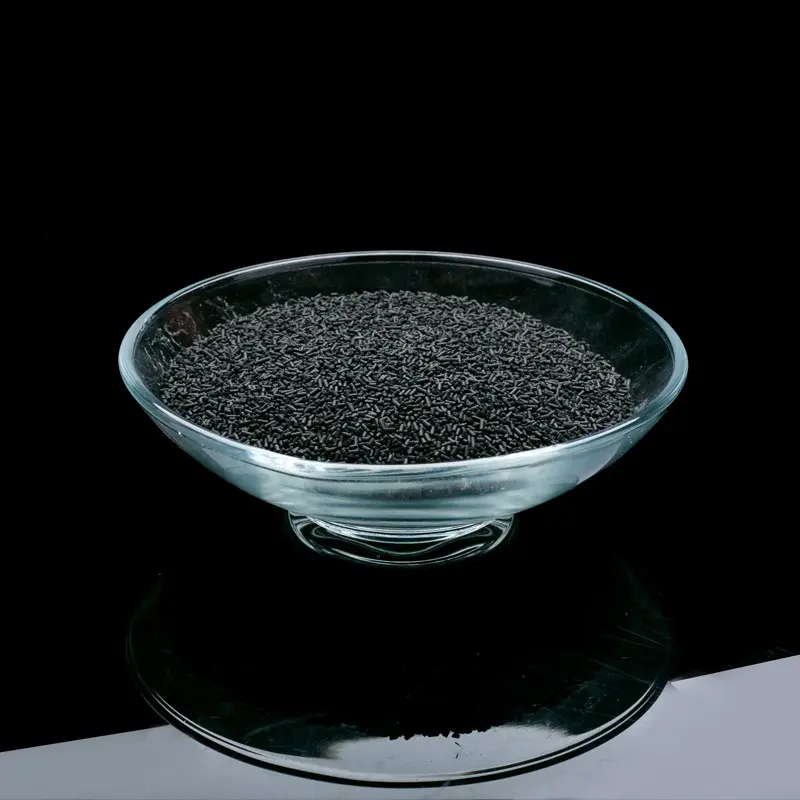
For gases with molecular diameters close to the pore size (such as O₂ and N₂), carbon molecular sieves strongly adsorb molecules with faster diffusion rates (such as O₂). For example, the molecular diameter of O₂ is approximately 0.346 nm, and that of N₂ is approximately 0.364 nm. Within the pores of carbon molecular sieves, the diffusion rate of O₂ is much higher than that of N₂. Therefore, within a short period of time, O₂ is preferentially adsorbed, while N₂, due to its slower diffusion, is enriched.
Adsorption capacity increases with increasing pressure and decreases with decreasing pressure. This property makes it well-suited for pressure swing adsorption (PSA) processes—a continuous separation process using pressure-dependent adsorption and pressure-dependent desorption.
Carbon molecular sieve is a non-polar material. Its adsorption capacity for non-polar or weakly polar gases (such as O₂, N₂, CO) is stronger than that for polar molecules (such as H₂O, CO₂). However, polar impurities (such as water, CO₂) in the raw gas must be removed first to avoid micropore clogging.
|
Diameter |
1.0-1.2mm |
|||
|
Bulk Density |
680-700g/l |
|||
|
Adsorption Rate |
2*60s |
|||
|
Crush Strength |
≥60N/piece |
|||
|
Type |
Adsorbent pressure |
N2 purity |
N2 quantity |
Air / N2 |
|
(Mpa) |
% |
(NM3/h.t) |
||
|
CMS-200 |
0.75-0.8 |
95 |
360 |
1.75 |
|
97 |
320 |
2.0 |
||
|
98 |
240 |
2.3 |
||
|
98.5 |
235 |
2.34 |
||
|
99 |
225 |
2.41 |
||
|
99.5 |
200 |
2.6 |
||
sieves is gas separation and purification, particularly in pressure swing adsorption (PSA) processes:
1. Nitrogen Generation (the core application)
● Principle: When air (containing O₂, N₂, Ar, etc.) enters the PSA tower, the carbon molecular sieve, under pressure, preferentially adsorbs O₂, which has a faster diffusion rate (due to its smaller molecular diameter). N₂, due to its slower diffusion, is able to pass through the adsorption bed and be output as product gas. During pressure reduction, the adsorbed O₂ is desorbed, and the molecular sieve is regenerated.
● Advantages: Compared to cryogenic air separation, PSA nitrogen generation offers lower investment, lower energy consumption, and flexible start-up and shutdown. It can produce nitrogen with a purity of 95–99.999%, meeting the needs of the chemical, food, and electronics industries.
● Applications: Chemical pipeline purging, preservation of foodstuffs, electronic packaging, and metal heat treatment..
2. Other Gas Separation
● Hydrogen Purification: Adsorbs impurities such as CO and CH₄ from syngas (containing H₂, CO, and CH₄) to purify H₂(H₂molecules have a diameter of 0.289 nm and diffuse rapidly, making them difficult to adsorb into micropores).
● Inert Gas Separation: For example, separating Ar from air (requires special pore size design as Ar and N₂molecules have similar diameters).
3. Environmental Protection and Industrial Auxiliary
● VOC Recovery: Adsorbs volatile organic compounds (such as benzene and toluene) from industrial waste gases, enabling resource recovery or achieving emission standards.
● Gas Drying Pretreatment: Serves as an auxiliary adsorbent to remove trace moisture from gases (requires use with a dehydrating agent to prevent water from clogging micropores).